Active colonies situated under high eaves, wooden soffits, and porch cornices present immediate health and structural liabilities to families, domestic pets, and visitors. In older Allegheny County properties, such as…
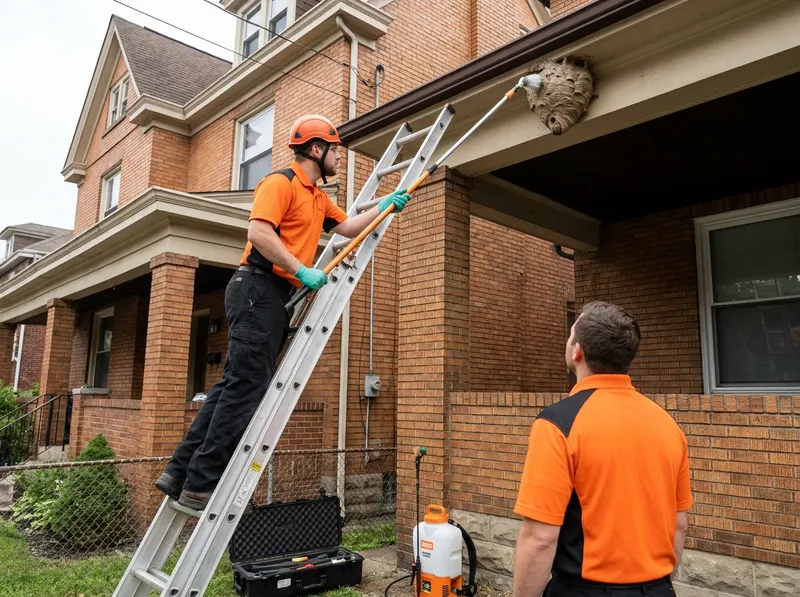
Active colonies situated under high eaves, wooden soffits, and porch cornices present immediate health and structural liabilities to families, domestic pets, and visitors. In older Allegheny County properties, such as brick Victorian residences in Shadyside and Squirrel Hill or flat-roof rowhomes in Lawrenceville and Bloomfield, hollow rooflines and unsealed fascia boards offer ideal shelter for aggressive social wasps. A mature colony of baldfaced hornets (Dolichovespula maculata) can expand to more than 400 workers by late August, creating protective aggression zones that span 15 to 25 feet around entry thresholds. Nexford Pest Solutions deploys a protective, guardian-led protocol designed to strip away the panic of territorial swarms by executing clinical, non-broadcast removals that directly resolve the threat at the nucleus without saturating living spaces in indiscriminate aerosols.
Selecting professional physical extraction over store-bought aerosol sprays prevents colonies from dispersing into adjacent building voids. Over-the-counter jet canisters agitate defensive workers, frequently driving panicked stinging insects behind brick veneers, floor joists, or into living rooms via unsealed window frames. In densely built neighborhoods like the South Side Flats, East Liberty, and Brookline, shared party walls and narrow setbacks mean a provoked swarm risks stinging neighboring households. According to structural pest guidelines published by the U.S. Environmental Protection Agency, targeted application directly into the nest entrance limits chemical drift while ensuring total mortality of reproducing queens. Technicians wear heavy-gauge, ventilated protective gear meeting standards recognized by the National Institute for Occupational Safety and Health, enabling calm, controlled neutralizing of aggressive aerial envelopes.
The removal process follows an orderly, three-phase containment sequence. First, a certified technician conducts an exterior survey to identify secondary foraging routes, distinguishing harmless solitary mud daubers from territorial aerial yellowjackets (Vespula species). Second, technicians inject a rapid-knockdown, micro-encapsulated formulation or targeted pyrethroid dust meeting Pennsylvania Department of Agriculture regulatory requirements directly into the entry hole, arresting flight within 3 minutes. Third, the structural anchor point is scraped clean, bagged, and removed from the property, followed by an enzymatic cleanse that dissolves the queen's chemical trail pheromones. Where nests invade high peaks near Mount Washington Overlook or mature tree canopies edging Highland Park and Frick Park, specialized extension ladders compliant with OSHA ladder safety regulations are deployed to reach heights exceeding 28 feet safely.
Preserving domestic safety and interior air quality remains central to the treatment framework. All barrier treatments applied along soffits and fascia boards utilize low-volatility formulations certified safe for areas frequented by children and pets once fully dried, generally within 60 to 90 minutes. Homes constructed with fieldstone foundations and century-old framing require exclusion work rather than recurring chemical cycles; technicians identify gaps using guidelines from the National Park Service Preservation Briefs to protect architectural integrity. To verify ongoing compliance with wildlife safety, honeybee swarms (Apis mellifera) are differentiated from aggressive wasps; honeybee colonies are directed toward local apiary recovery rather than extermination, aligning with conservation directives from the U.S. Fish and Wildlife Service and the Pollinator Partnership. Property owners receive transparent, one-time remediation quotes without multi-year service contract obligations.
Every job gets a firm, written price after a free on-site visit.
Tell us about your stinging insect and aerial wasp nest removal job in Pittsburgh and we'll send a clear, written quote, usually the same day.
 Nexford Pest Solutions